Whilst I was in Memphis I became a reporter for The Daily Helmsman newspaper for one semester. The University print newspaper had daily editions in both digital and print formats distributed across the city.
The Daily Helmsman
The Daily Helmsman


The global charts: Hitting the top spot or missing the mark?
By Luke Chapman
One could compare the charts as the musical equivalence of democracy, as with democracy, both aren’t perfect. There are multiple reasons leading to the fall of the charts, essentially, the constantly changing face of music has gravely wounded the face of the charts. Chart music is often seen as a specific music genre easily comparable to pop music, however in recent times, less and less songs are entering the charts every week due to the same songs being played, streamed and purchased. As of this moment, there are multiple types of charts reigning, album charts, singles, downloads, streams, vinyl albums, vinyl singles and compilations, they each have their own designated chart. The main chart we focus on is a culmination of all single sales including physical, downloads and streams. But does having so many different forms of chart detract from the prestige of reaching the top spot, when four other artists could be one number one on the same week.
This will come as a shock to no-one, but the main reason the chart system has been flipped upside down is… STREAMING (I wasn’t kidding when I said it would be no surprise). The public now listens to music in copious different forms, Spotify, Soundcloud, Youtube, you name it, everyone is individual, as are their listening habits. This leads to the one culmination of mainstream mediums to become more and more obscure, thus, giving it less meaning and impact. But back specifically to streaming, the main difference between streaming and a purchase is obviously the monitoring. If someone downloads a single from iTunes, we can have no idea how many times its been listened to, but with streaming we can get a precise figure to the millisecond of how many times a song has been played. Because of this, a new formula had to be created to make a download of a song, and a stream comparable. As it stands, 100 streams of a song counts as one purchase, with this formula, if someone streams an album 100 times, it will count as each single individually purchased once, not an album sale. It’s said that Ed Sheeran is the person who has finally broken the sanctity of the charts. Back when he released his third album “÷”, every single one of the 16 songs reached the top 20 that week, meaning there were only four songs in the top 20 which were not on Divide. STREAMING. I’m clearly not blaming Ed for releasing a high selling album for breaking the charts, but he was mainly the reason people realised the charts had become a shambles.

There are many problems with streaming being included within the charts, I do believe they should be incorporated, its the way the vast majority listen to music nowadays so it provides crucial statistics, however further problems arise. Aside from “the Ed sheeran problem” there are many others, we can never truly determine how many streams should be equivalent to one purchase. Someone could download a song and listen to it once, equally if one person listens to a track more then 100 times, surely it should still only count as one purchase? Chart rigging is also much more easy today, if someone decided to try and cheat the charts by purchasing a song over and over again, they’re still putting more money into the industry, and more fool them, however anyone could leave their phone on shuffle and accumulate thousands of streams which will all go towards sales records. There is also the problem of streaming being much more accidental, people can shuffle playlists including songs they have no interest in listening too, but streams would still be counted for the artist, this would never have happened with purchases. If someone hasn’t chosen to listen to that song, why should their stream go towards increasing the song’s figures?
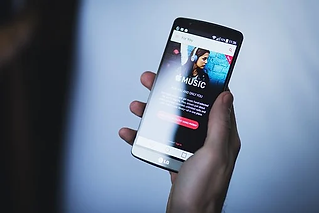
Streaming isn’t all bad for the charts. It can also in some ways increase the range of music, I know personally I listen to songs on Spotify frequently which I would never have paid 99p for, and I’m sure I cant be the only one. It makes it easier to discover new music as people don’t have to pay for music they’re unsure of, and it can open a lot more doors for new music to be introduced into the final charts. Along with this, I still listen to music on streaming services which I previously purchased, this means that more money is being injected into the music industry as opposed to me listening to this music on a CD player.
Ultimately, this national treasure has seen a tragic demise in the past few years. People constantly shuffling the top 50 playlist means that the charts will never change, leading to songs now being on the top spot easily for 15 weeks at a time. If we don’t change what we listen too then the charts are just going to become more and more redundant, and new music is going to suffer horrendously. Wether your’e a huge charts fan, or listened in passing, we can appreciate its had a huge impact on music over the past decades, and its rapid decline is very significant in the direction of the industry and the impact of streaming.
Previous article
Blog Home
Next article
The first charts were considered to have officially been created in 1969 when the British market research Bureau was formed to compile chart information in connection with the BBC and the Record Retailer. In 1952 Percy Dickins from NME phoned 20 different record shops for their sales data for that week, from here, Dickins curated a top 12 hit parade of the highest selling songs. This was the conception of the chart system which is still running weekly to this day. However the charts have been slightly meandering more towards the crevice of irrelevance in more recent years. There has been a variety of factors which have contributed to the demise of the age old tradition, meaning the impact and prestige has been slowly falling into a downwards spiral.