Whilst I was in Memphis I became a reporter for The Daily Helmsman newspaper for one semester. The University print newspaper had daily editions in both digital and print formats distributed across the city.
The Daily Helmsman
The Daily Helmsman


LGBT music and pride, whats the tea?
By Luke Chapman
Music is a huge part of most people’s lives, but LGBT music seems to have its own branch of history, one of which has been crucial in influencing opinions and pushing for equality. Some of the first recorded instances of LGBT notions within music comes from Ma Rainey in the American blues era. Rainey referenced past sexual encounters with other women throughout her songs, which were prominent in the very early 1900s, a big step for homosexual awareness in a time of deep south dominance. These actions could be perceived as paving the way for the genre of jazz, and artists such as Nina Simone and Billie Holiday. Jumping through history we immediately come across the likes of David Bowie and Queen, needing no explanation as to how their public nonconformity helped to build the foundations for more and more acceptance.
From the Bowie era, we arrive directly, and extremely importantly into disco. The origins of disco were based around the idea of creating clubs that the marginalised population could feel safe within. The coloured and queer married together in New York clubs to listen to new and developing music. Disco was a huge step in creating places where the LGBT community could be as one, and face less judgement and persecution from the fellow population. It was no secret when disco hit the main stream, that it was the property of the minorities, and those that didn’t like it, always had their stagnant boring genres to fall back too. Disco is possibly the biggest example of music being used to publicly push the gay rights agenda, creating a certain level of normality, or awareness. Music has always been a great tool in promotion and protest, and the 70’s was the time music was needed in this format.
Departing disco and taking a look on today’s musical climate, its no secret the two decades are light years away. LGBT musicians are rife and thriving, charts are being topped by queer superstars, and queer music no longer needs to be a fight or a statement. People care less and less about whether their favourite song is by a lesbian singer or bisexual producer (although this still isn’t a perfect world). If a song has a catchy hook and banging bass, do people pay attention to the artist? We’re in a world where a lot of people can stream a song time and time again, but not tell you a single thing about the artist, whether this is blissful ignorance, or gay acceptance, it’s certainly worlds away since the advent of disco and house. “I kissed a girl” by Katy Perry, the scissor sisters, Mika and so many more could be seen as testing the waters for LGBT music throughout the 00’s decade, and it went well! Now in 2019, we have Taylor Swift writing songs simply to tell homophobes they “need to calm down”, and I’m here for it. Being gay is much less of a problem with regards to record sales then it was, although still not irrelevant. When Olly Alexander told his record label about his sexuality, he was told not to come out as it would hinder record sales, but have Years & Years sold more records to the gay audience then they would have being kept in the closet? I believe this question pleads a further notion, is there such a thing as a gay genre? We now have the likes of RuPaul, Todrick Hall and basically any drag queen ever releasing music, and in my opinion “your makeup is terrible” from Alaska is not aimed at a hetero mainstream audience. One thing is for certain, the LGBT market/ audience is leading a lot of artists further and further into success, queer baiting, or clever marketing? Who’s to decide.
It’s extremely evident the LGBT agenda has influenced a lot of music, and music has massively helped to the push the LGBT agenda. After all, the Stonewall riots were started in a night club. This is by no means the extent of this topic, there’s so much more that cant even begin to be covered here, but we need to take a moment to appreciate the deep and crucial link between the struggle and fight that’s been happening for decades, and even the fight that musicians still take part in. This is the fight which allows us to go to a gay club and listen to Gaga all night long. Maybe this is the reason music is so crucial for us to enjoy pride events, either that, or the fact it’s really boring to get blind drunk without music. Both make sense to me.

Previous article
Blog Home
Next article
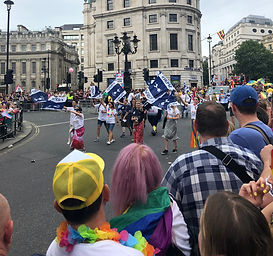
I’m writing this piece sat at my kitchen table one day after London pride with a slightly hazy head, meaning I’ve completed pride the way it’s meant to be done. The glitter, the sparkle, the flags, colour, and of course, the gays. But where does music fit into all this, and what homage has music paid over the decades to the LGBT+ agenda? On the initial forefront of pride month and its parades, its fairly obvious music bares a huge responsibility in making pride the event we know and love. The dancing, the partying, the after-partying, Cher, all music related, all quintessentially gay. The bare bones of pride month and pride parades are of course not about the music and drinking, it’s a protest, it’s publicity, it’s changing opinions, and it’s creating a safe and accepting space, but it’s not all political fighting. Pride may be a protest, but it also gives queer people the chance to kick back, celebrate equality, and just let our hair down in a place full of (mostly) like minded people, this is where the dancing, music, and partying comes into effect.